


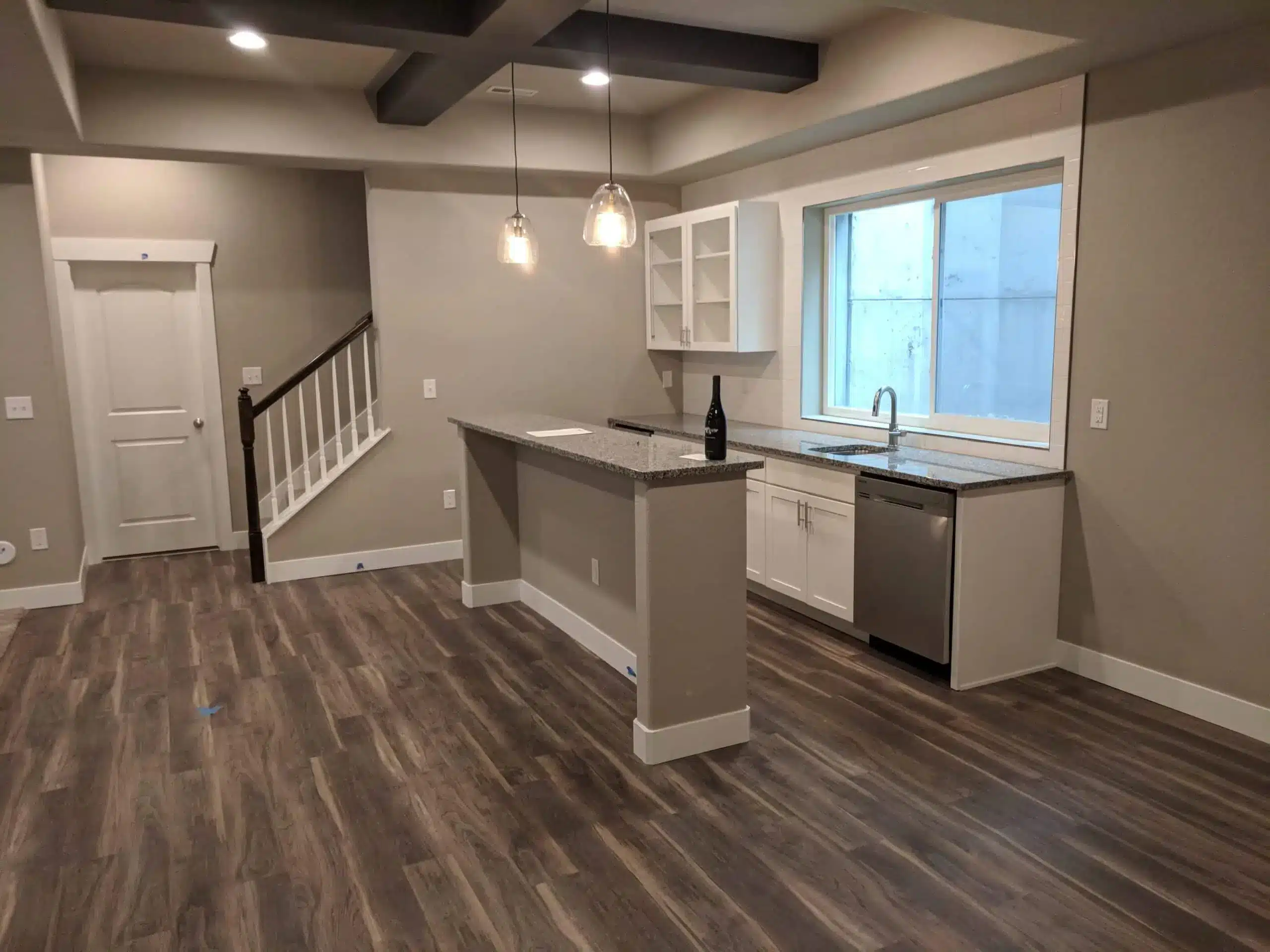
Finished Basement vs. Unfinished Basement: Value Comparison
If you own a home in Denver with an unfinished basement, you’re sitting on serious untapped potential. Whether you’re thinking about selling soon or planning to stay for years, the question most homeowners ask is the same: does finishing my basement actually add value? The short answer is yes — but the long answer is more nuanced, and it’s worth understanding before you invest.
In this guide, we compare finished and unfinished basements side by side, breaking down the return on investment, what buyers in the Denver metro area actually want, and when finishing your basement makes the most financial sense.
 What Counts as a ‘Finished’ Basement?
 What Counts as a ‘Finished’ Basement?
A finished basement is a below-grade living space that meets residential building code requirements. At a minimum, this means the space has:
- Insulated, drywalled walls and ceilings
- Flooring (LVP, carpet, tile, or another finished material)
- Electrical outlets, lighting, and HVAC integration
- Egress windows if sleeping areas are included
An unfinished basement, by contrast, is essentially raw space — exposed concrete, visible joists, and little more than a utility area. While perfectly functional for storage, it contributes minimally to your home’s livable square footage and appraised value.
The Real Estate Value Comparison
Return on Investment (ROI): According to national remodeling data, finishing a basement typically returns between 50% and 75% of the project cost at resale. In a high-demand market like Denver, where square footage is at a premium, that ROI can push even higher — particularly in neighborhoods like Capitol Hill, Washington Park, and Highland.
Appraised Value vs. Livable Square Footage: Finished basements are counted as livable square footage only when they meet specific criteria (see our guide on how to ensure your basement adds to your home’s square footage). This distinction directly affects how an appraiser calculates your home’s value — and what buyers are willing to pay.
Buyer Demand: Denver buyers increasingly expect move-in ready homes. A polished, functional basement — whether it’s a family room, home office, or rental suite — can be the deciding factor in competitive offers.
 Cost vs. Value Breakdown
 Cost vs. Value Breakdown
The average basement finishing project in Denver ranges from $20,000 to $75,000 depending on scope, square footage, and finishes. Here’s a rough value comparison:
- Basic finish (drywall, flooring, lighting): $20,000–$35,000 investment | Adds $15,000–$25,000 in appraised value
- Mid-range finish (bathroom, egress, bar area): $40,000–$60,000 | Adds $30,000–$50,000
- High-end/luxury finish: $65,000–$100,000+ | Adds $50,000–$80,000+
These figures vary based on your neighborhood, the quality of finishes, and the local real estate market at the time of sale. For a personalized estimate, contact the River North Basement Co. team for a no-obligation consultation.
When Finishing Your Basement Makes the Most Sense
Not every homeowner should rush to finish their basement immediately. Here’s a quick guide on when it makes the most financial and practical sense:
- You plan to stay 3+ years: You’ll benefit from the added living space and recoup value over time.
- You’re preparing to sell: A professionally finished basement helps your listing stand out in Denver’s competitive market.
- You need rental income: A walkout basement converted into a rental suite can generate monthly cash flow. See our post on converting your basement into a walkout rental.
- You want more livable space: Adding a home office, gym, or guest suite can dramatically improve your quality of life — especially relevant after the remote work boom.
The Bottom Line
A finished basement consistently outperforms an unfinished one in resale value, buyer appeal, and day-to-day functionality. For Denver homeowners, where lot sizes are limited and additional square footage is expensive to build, finishing your basement is one of the smartest investments you can make.
Planning a basement renovation? Explore our complete guide to basement finishing in Denver for helpful information about costs, permits, project timelines, design ideas, and more.
→ Request a free consultation — no obligation, just honest guidance.
FAQ: Finished vs. Unfinished Basements
Does a finished basement count toward square footage?
Yes — but only if it meets specific code requirements including ceiling height minimums and egress. See our full guide on how to ensure your basement is counted in your home’s square footage.
What is the average ROI on a finished basement in Colorado?
Most homeowners in Colorado can expect to recoup 50–75% of their basement finishing costs at resale, though this varies by neighborhood, scope, and market conditions.
How long does it take to finish a basement in Denver?
A typical basement finishing project takes 6–12 weeks depending on scope, permit timelines, and design complexity.
Basement Finishing Insights & Ideas
How to Add Natural Light to Your Basement Remodel
Zoning Rules That Affect Basement Renovations in Denver
Leave a Reply
You must be logged in to post a comment.